Anchoring & Moorings
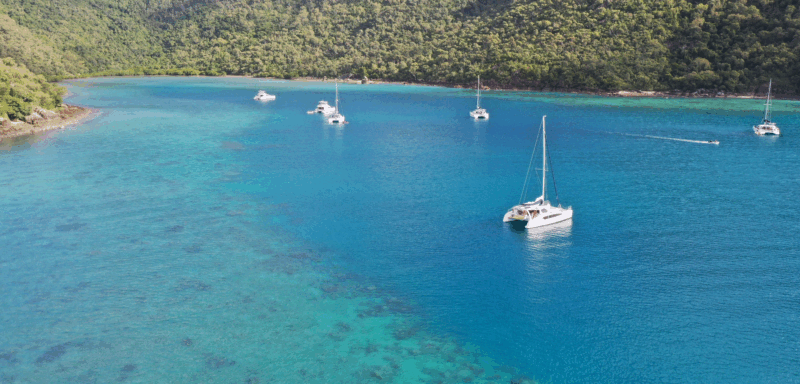
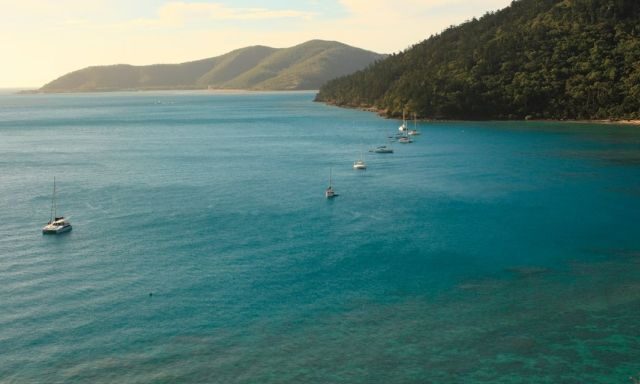
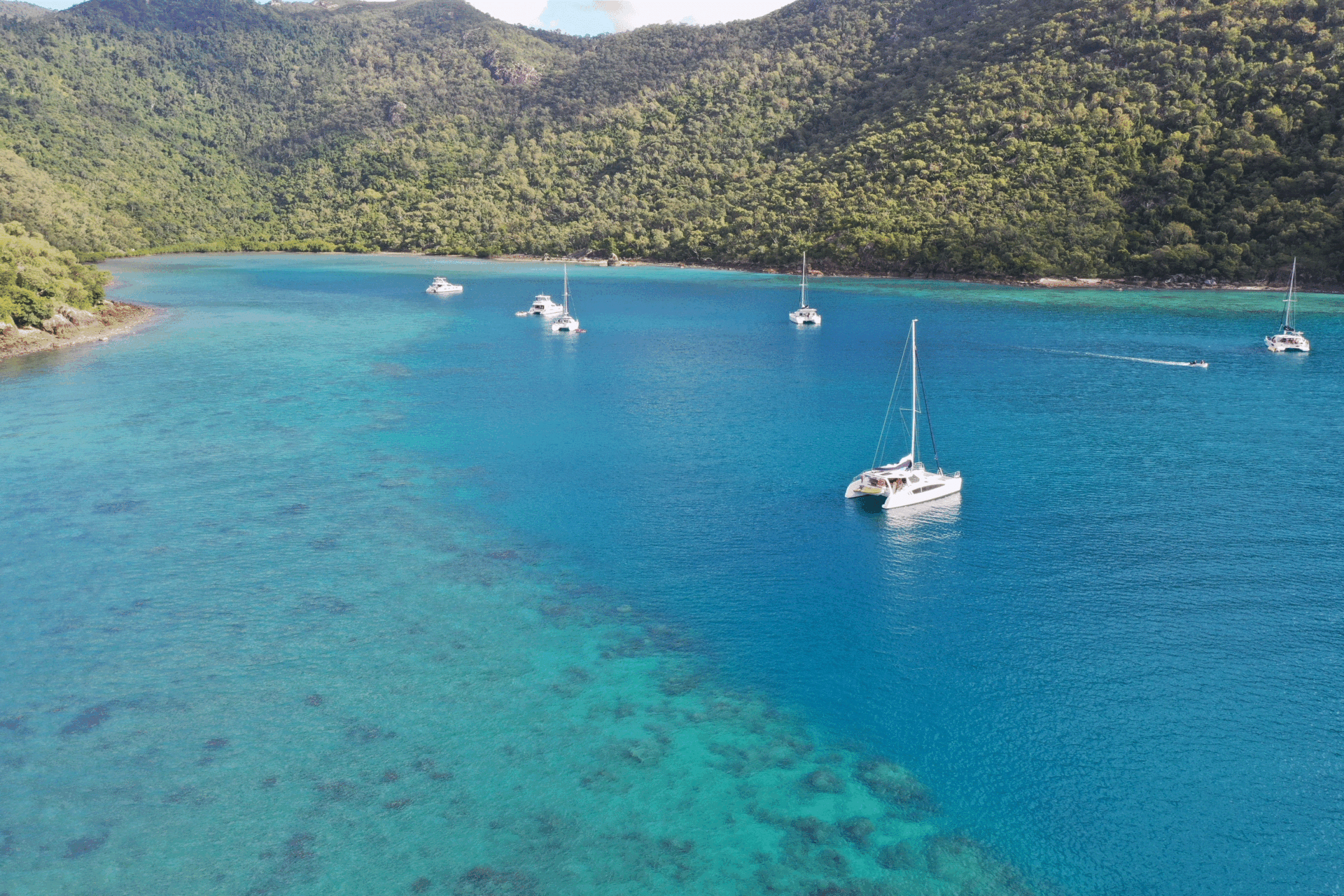
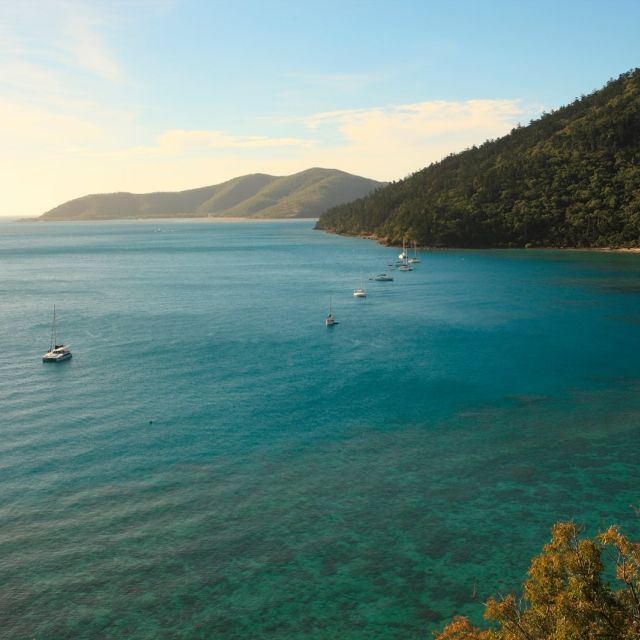
Few things beat waking up in a quiet Whitsunday bay. Getting there means anchoring well, because the waters here are very tidal and most anchorages are fringed by coral reef. Your pre-charter briefing includes a demonstration of anchoring and mooring, and these tips will help you settle in confidently every afternoon.
Snapshot
| Approach speed | Less than 3 knots |
| Depth under the keel | At least 2 m at low tide, no more than 15 m at high tide |
| Minimum chain | 40 m, or 4 times the depth in water over 10 m |
| Anchored by | 4:00 pm, in an approved anchorage |
| Public moorings | 2 hours from 7:00 am, or overnight if picked up after 2:00 pm |
Anchoring
Where can I anchor overnight?
Only in anchorages approved by Whitsunday Escape for the wind conditions on the day. They’re highlighted in your on-board copy of 100 Magic Miles, and listed in the Whitsunday Escape Cruising Notes. We will also confirm your choice at the morning radio schedule. If you’d like to stop somewhere not on the list, check with us first.
Aim to be anchored by 4:00 pm. Once the sun drops low, it becomes hard to see the difference between deep water and reef. Midday is the best time to enter any anchorage.
How do I choose a spot to anchor?
It’s not where you drop the anchor that matters, but where you’ll end up. Your boat will swing in a full circle around the anchor as the wind and tide change, so make sure there’s no reef, shallow water or other boats inside that circle.
- Use your charts, 100 Magic Miles and the tide tables to check the depth at both low and high tide
- You need at least 2 m under the keel at low tide and no more than 15 m at high tide
- Charts show depths at low tide
- Approach from the same direction as boats already anchored. If there are none, head into the wind or tide, whichever is stronger
- Wear polarised sunglasses and avoid approaching into the sun. If you’re looking into glare, go out and come in from another direction
How much chain should I lay out?
More chain means a more secure boat. The weight of the chain absorbs the pull of the wind and helps the anchor dig in. Every boat carries at least 65 m of chain, marked at 40 m (green), 50 m (blue) and 60 m (red).
| Depth at high tide | Chain to lay out |
|---|---|
| Up to 10 m | At least 40 m |
| Over 10 m | 4 times the depth (12 m deep = 48 m of chain) |
| 15 m | All the chain |
| Winds over 25 knots | All the chain |
How do I anchor?
- Tie the dinghy up in the davits and bring in any fishing lines
- Approach very slowly, at less than 3 knots, with a crew member on the bow watching for reef
- Bring the boat to a complete stop
- Let the chain out slowly as the boat drifts backwards with the wind or current, until you reach the right length
- Fit the snubber or bridle, then let out a little more chain so the load sits on the rope
- Reverse gently at low revs for 5 to 10 minutes to dig the anchor in
- Check your position against landmarks and set an anchor drag alarm on your phone
A quiet approach works best. Agree hand signals between the bow and the helm before you arrive: clenched fist for neutral, thumbs up for forward, thumbs down for reverse, a hand on the head for straight ahead, and an arm out for port or starboard.
What if my anchor drags?
Raise it and try a different spot, checking 100 Magic Miles to make sure the bottom is suitable. In strong winds or a wind change, let out all the chain. The anchor winch uses a lot of power, so if you’re re-anchoring, keep the engines running at 1,200 to 1,500 RPM in neutral to recharge the batteries.
How do I raise the anchor?
The anchor winch isn’t strong enough to pull the boat forward, so the helm does the work.
- Run the engines in neutral for at least 15 minutes beforehand to charge the batteries
- Check there are no ropes or lines in the water and the dinghy is in the davits
- Motor slowly forward along the line of the chain, following hand signals from the bow
- Only run the winch when the chain points straight down
- Clear the chain in the locker from time to time so it doesn’t pile up and jam the winch
If the anchor is stuck, wait a few minutes and try again, as the boat’s motion often frees it. If it’s caught on rock or coral, never motor in circles. Position the boat over the chain, let out another 4 to 5 m, then try again. Still stuck? Call us.
Moorings
How do public moorings work?
Public moorings are installed by the Great Barrier Reef Marine Park Authority to protect coral from anchor damage, and they give you close access to some of the best reefs. They’re first in, first served.
- Between 7:00 am and 4:00 pm, you can stay for up to 2 hours
- Pick one up after 2:00 pm and you can stay overnight, leaving by 9:00 am the next day
- If other moorings are free, there’s no need to move after 2 hours
- Each mooring has limits on boat size and wind strength, listed in 100 Magic Miles and the Marine Parks handout
- Tender moorings sit in shallow water. Don’t approach them in the main boat
Picking up a mooring takes two experienced crew plus the helm. If you don’t have that, it’s safer to anchor.
Can I use resort moorings?
Yes, at some resorts. Book directly with the resort, and make sure you’re attached to the chain, not just the thin pick-up rope. Never use private moorings, as they aren’t surveyed or maintained and can break free.
How do I pick up a mooring?
- Approach very slowly into the wind or tide, facing the same way as other moored boats
- Have a crew member point at the pick-up rope with the boat hook so the helm can see it
- Stop 3 to 5 m short, then motor slowly forward
- Lift the pick-up rope with the boat hook. It’s designed only to lift the rope, not to pull the boat
- A second crew member takes the rope and secures it as shown in your boat’s Operations Manual
If the mooring buoy or rope ever goes under the boat, take the engines out of gear immediately.
How do I drop a mooring?
Warm up the engines and have a crew member on the bow. When the helm is ready, the crew drops the rope and keeps pointing at it while the boat reverses slowly away. Keep well clear of the reef and nearby moorings on the way out, as the tide will likely have changed since you arrived.
Three Mistakes That End Holidays Early
Place after the public moorings section, styled as a highlighted callout.
- A mooring rope around the propeller. This is the main cause of structural damage to charter boats. Go slowly, keep the rope in sight, and take the engines out of gear if it goes under the boat.
- Anchoring too shallow or too close. Anchors usually get stuck when dropped too shallow, over growing coral or outside approved anchorages. Check your swing circle at low tide.
- Too little chain. It’s the weight of the chain that holds you through the night. Lay out at least 40 m, and all of it in strong winds.
Frequently Asked Questions
Do I need to book a public mooring? No. Public moorings are first in, first served, and work on an honour system. Choose one suited to your boat size so others can use the rest.
Can we raft up with friends on another boat? No. Rafting up isn’t permitted, whether at anchor or on a mooring.
Can I stay on a mooring near Airlie Beach before I return the boat? Yes. Whitsunday Escape has free moorings outside Coral Sea Marina. Contact us first to check availability.
Can I use any mooring I find? No. Only use public moorings, resort moorings you’ve booked, or our own moorings. Private moorings aren’t maintained and can break free, and the moorings near Dent Island are off limits as they can damage the boat.
Who should operate the anchor winch? Only an adult who has been shown how at the briefing. It’s dangerous machinery, so keep children and inexperienced crew well clear. If the clutch slips occasionally, you’re using it correctly.
What if I’m not sure an anchorage suits the conditions? Ask us at the morning radio schedule. We’ll confirm whether your planned anchorage suits the forecast wind before you set off.
Before You Anchor
- Confirm your anchorage is approved for today's wind
- Check the depth for both low and high tide
- Dinghy in the davits and fishing lines in
- Slow to under 3 knots, with a lookout on the bow
- Lay out at least 40 m of chain and fit the bridle
- Reverse gently to dig the anchor in
- Set an anchor drag alarm on your phone
Anchoring & Moorings

1/4