
Whales in the Whitsundays
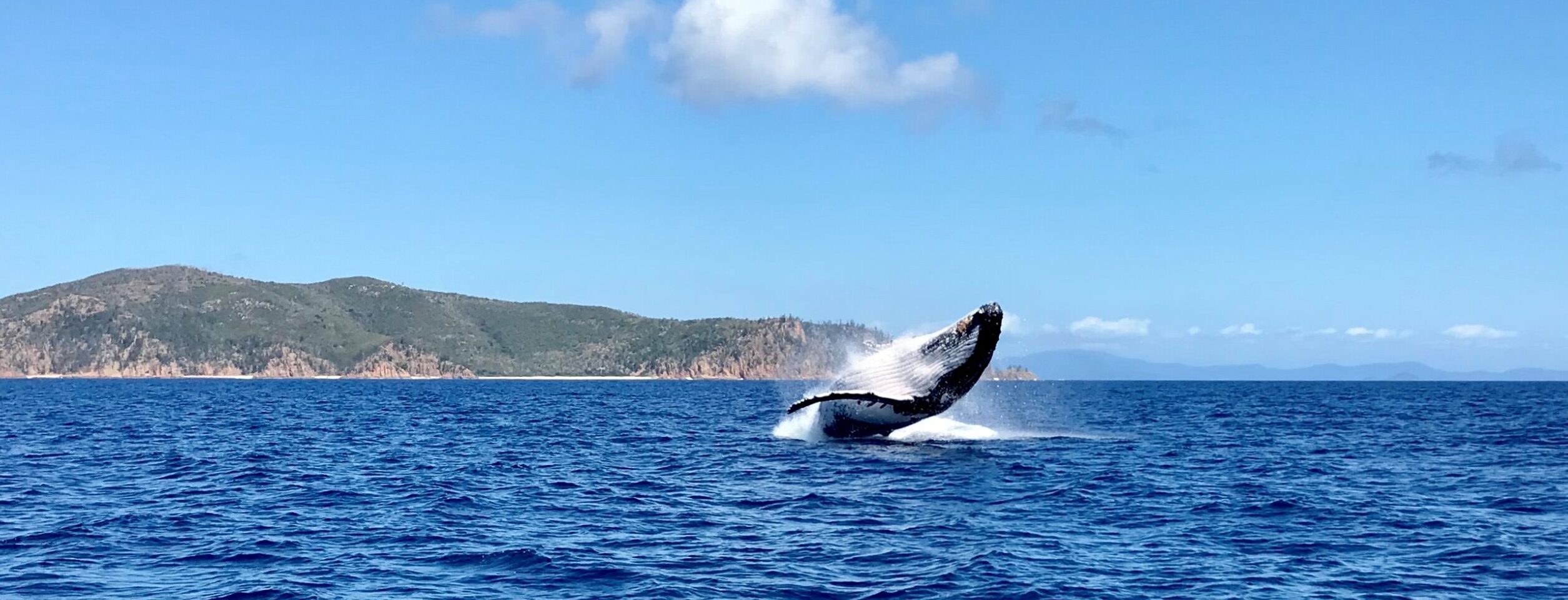
Every winter, humpback whales swim north from Antarctica to the warm, sheltered waters of the Whitsundays to mate, give birth and raise their calves. From June to September you have a great chance of seeing them blow, breach and tail slap from the deck of your own boat. Most of the Whitsundays is a Whale Protection Area, so every boat must stay 300 m away. Commercial whale watching tours are not allowed in this area, so most sightings happen by chance as you cruise between the islands, and on a charter you are on the water from morning to night.
The Whitsundays Whale Heritage Area

In 2024 the World Cetacean Alliance named the Whitsundays a Whale Heritage Area (originally called a Whale Heritage Site). The award recognises the Whitsundays as one of the few known humpback calving grounds on Australia’s east coast, and the community’s work to protect whales and promote responsible whale watching. The Whitsundays is only the second Whale Heritage Area in Australia after Hervey Bay, the first inside the Great Barrier Reef Marine Park, and the only one in the world within a UNESCO World Heritage Area.
The program is led locally by Whales of the Whitsundays, a community group that hosts Welcome Whale each June, a celebration on the Airlie Beach foreshore to mark the start of whale season.
The Whale Heritage Area is a global accreditation. It is separate from the Whitsunday Whale Protection Area, which sets the legal 300 m approach distance explained below.
Whale season in the Whitsundays
Humpback whales are in the Whitsundays from June to September, and dwarf minke whales pass through at the same time. Keep a lookout from May to September, as early and late whales can arrive either side of the main season. Whales choose the calm, protected bays around Airlie Beach and the islands to give birth, so it is not unusual to see a new calf taking its first breaths beside its mother. Humpback numbers on the east coast are recovering by about 10% a year, so sightings are becoming more common.
Whales you might see
These are the whales charterers see most in the Whitsundays.
- Humpback whales: the most common. Adults grow to 12 to 15 m and weigh up to 40 tonnes.
- Dwarf minke whales: smaller whales that pass through in winter.
- Pilot whales: seen occasionally.
Whale behaviour to look for
- Blowing: the spout of a surfacing whale is often the first thing you see, and it can be spotted from a long way off.
- Breaching: a humpback uses its powerful tail, called a fluke, to launch itself out of the water and land with a huge splash. Scientists are not sure if it cleans their skin, sends a signal, or is just for fun.
- Mothers and calves: they swim very close together and often touch flippers. Calves nurse for about a year and are fully grown at about 10 years old.
- Living off reserves: humpbacks feed on krill and small fish only in the Antarctic summer, then live off stored fat while they migrate.
Where to see whales in the Whitsundays
Whales can turn up anywhere in Whitsunday waters, from the Whitsunday Passage to the bays around the outer islands. Many sightings happen while you are underway between anchorages, and some guests watch whales from the cockpit at anchor in the late afternoon. Height helps, so scan the water from the flybridge or helm station, or from a lookout on an island walk.
If a whale comes close to your boat
Whales are curious and sometimes swim over for a closer look. If a whale comes within 300 m of your boat, put the engines in neutral or turn them off and let it move around you. Do not move towards it. Once it has moved away, post a lookout, start the engines and leave the area slowly.
Boating safely in whale season
- Post a lookout whenever you are underway, especially from May to September.
- Slow down where whales have been seen, to lower the risk of a collision.
- Never place your boat between a mother and her calf.
- Travel parallel to whales, never towards them, and never try to overtake or herd them.
- Do not use engine noise or speed to change a whale’s behaviour.
- Avoid sudden changes in speed, direction or noise.
- Move away immediately if a whale suddenly changes behaviour. Signs include bumping the boat, rapid changes of direction or speed, prolonged deep dives, and tail slapping or swishing.
Report whale sightings and strikes
- Sightings: log them on the Reef Authority’s Eye on the Reef app, which also shows recent sightings and zoning.
- Strikes and strandings: you must report any boat strike. Call 1300 130 372 or use the QWildlife app to report a strike, stranding, or an injured, sick or dead whale.
Whales in the Whitsundays


1/4


Fast Facts
- A whale is a mammal, not a fish, and breathes air
- An adult humpback is 12 to 15 m long and weighs up to 40 tonnes
- A humpback's tail markings are as unique as a fingerprint
- Humpbacks feed only in the Antarctic summer and fast while they migrate
- Calves nurse for about a year and are fully grown at about 10 years old
Whale watching rules in the Whitsundays
Whales are protected under the Great Barrier Reef Marine Park Regulations. These rules apply to every vessel, including your dinghy, and penalties apply.
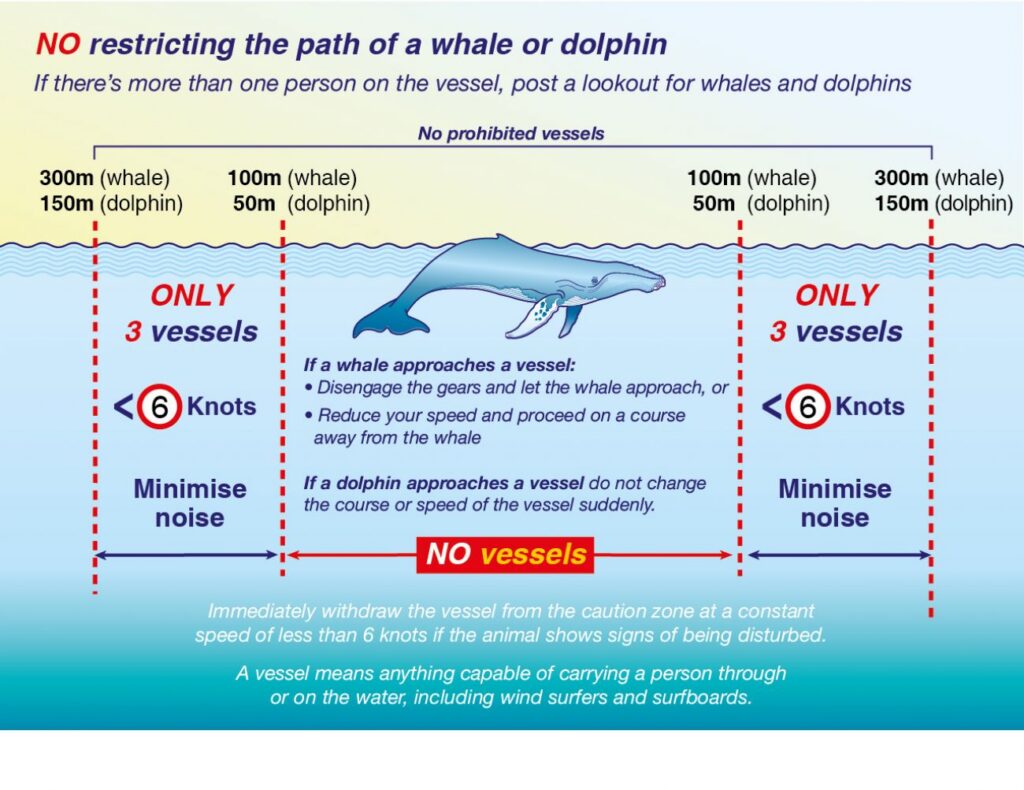
- Stay at least 300 m from any whale in the Whitsunday Whale Protection Area, which covers most of the Whitsundays. Outside the area, the minimum in the Marine Park is 100 m.
- Stay at least 300 m from a whale calf anywhere in the Marine Park.
- If three boats are already within 300 m of a whale, stay outside 300 m.
- Keep noise to a minimum within 300 m of a whale.
- Do not fly a drone below 1,000 ft or within 300 m of a whale.
- Do not get in the water if you see a whale. If you are already swimming, do not approach, chase or block its path, and return to the boat if you can.
Your briefing covers the Whale Protection Area, and the 100 Magic Miles guide on board has more detail.
What to Do in Whale Season
- Charter between June and September for the best chance of a sighting
- Post a lookout whenever you are underway
- Keep 300 m from whales
- Stop your engines if a whale comes close
- Log your sightings on the Eye on the Reef app
Frequently Asked Questions
When is whale season in the Whitsundays? Humpback whales are in the Whitsundays from June to September. Keep a lookout from May, as some whales arrive early.
How close can you get to a whale in the Whitsundays? Boats must stay at least 300 m from any whale in the Whitsunday Whale Protection Area, 300 m from a calf, and 500 m from a white whale. If a whale approaches you, stop and let it pass.
Are there whale watching tours in the Whitsundays? Commercial whale watching tours are not allowed in the Whitsunday Whale Protection Area. Most sightings happen by chance while boating between the islands, which is why a charter in whale season gives you so many chances to see them.
Can you swim with whales in the Whitsundays? No. Do not get in the water if a whale is nearby. If one approaches while you are swimming, do not swim towards it, and return to the boat if you can.
Can you see Migaloo in the Whitsundays? Migaloo has been seen in the Whitsundays on a number of occasions, and Chalkie, another white humpback, was born here. Sightings are rare, and boats must stay 500 m away.