
Our Heritage – First Nations in the Whitsundays
Acknowledgement of Country
In the spirit of reconciliation, Whitsunday Escape acknowledges the Traditional Custodians of Country throughout Australia and their connections to land, sea and community.
We proudly operate and sail on the sea Country of the Ngaro people, the Traditional Owners of the Whitsundays, and pay our respect to their Elders, past and present, and extend that respect to all Aboriginal and Torres Strait Islander peoples.
The world’s oldest continuous culture
Long before the Whitsundays became a sailing destination, these islands and waters were home to people with deep knowledge of the sea, the seasons and the sky.
- First Nations peoples have lived in Australia for at least 65,000 years.
- More than 500 distinct nations lived across the continent, each with its own culture, beliefs and language.
- At least 250 languages, with many dialects, were spoken before European colonisation.
- Genomic research has identified Aboriginal Australians as the oldest continuous civilisation on Earth.
Did you know? Aboriginal and Torres Strait Islander peoples are often described as the world’s first astronomers. Dreaming stories across the country explain tides, eclipses, the movement of the sun and moon, and the changing position of the planets through the year.
Who are the Traditional Owners of the Whitsundays?
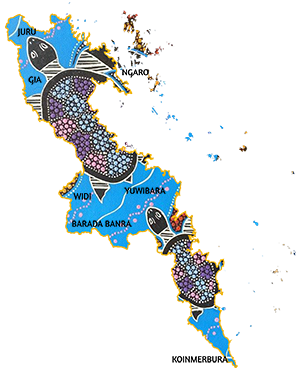
The Mackay, Whitsunday and Isaac regions are home to the Yuwibara, Koinmerburra, Barada Barna, Wiri, Ngaro, Gia and Juru peoples.
The Ngaro people are the Traditional Owners of the Whitsunday Islands and coastal bays. The Gia people are the Traditional Owners of the land around Proserpine.
The Ngaro: the canoe people
The Ngaro were a true maritime people, living across both the mainland and the islands. Their world was the open water, the fringing reefs and the mangrove systems, and they hunted large marine animals from canoes built for sea crossings.
- At least 9,000 years of history. Archaeology confirms continuous Ngaro presence for at least 9,000 years. Descendants and researchers agree it is far longer, with many older sites now beneath the sea after sea levels rose.
- Ocean-going canoes. Known as winta, Ngaro canoes were made from three pieces of ironbark sewn together with fibrous root, and were strong enough for open-water journeys.
- A regional trade centre. South Molle Island holds one of Australia’s largest pre-European stone quarries. Its distinctive stone was shaped into cutting tools and traded as far north as Cape Cleveland, near Townsville.
- Living evidence. Hundreds of sites remain across the islands, including stone fish traps, rock shelters used as wet-season camps, and rock art at Nara Inlet on Hook Island.
- Nara Inlet’s caves. Shell and bone middens show people were using these caves at least 2,500 years ago.
Archaeo-anthropologist Dr Bryce Barker, who recorded some of the oldest archaeological sites in eastern Australia here in the island group, has described the Ngaro as distinct even from other coastal peoples because their whole domain was the sea. (Read the ABC story)
Visit the Ngaro Cultural Site on your bareboat holiday
One of the most rewarding stops on any Whitsunday Escape itinerary is the Ngaro Cultural Site in Nara Inlet, Hook Island. It’s also one of the best-protected overnight anchorages in the islands, so it’s easy to build into your trip.
How to get there
- Anchor in Nara Inlet.
- Take the dinghy to the head of the inlet and land on the small beach to the right.
- Follow the Whitsunday Ngaro Sea Trail. It starts with steep rock steps, then eases into a gentle bushwalk.
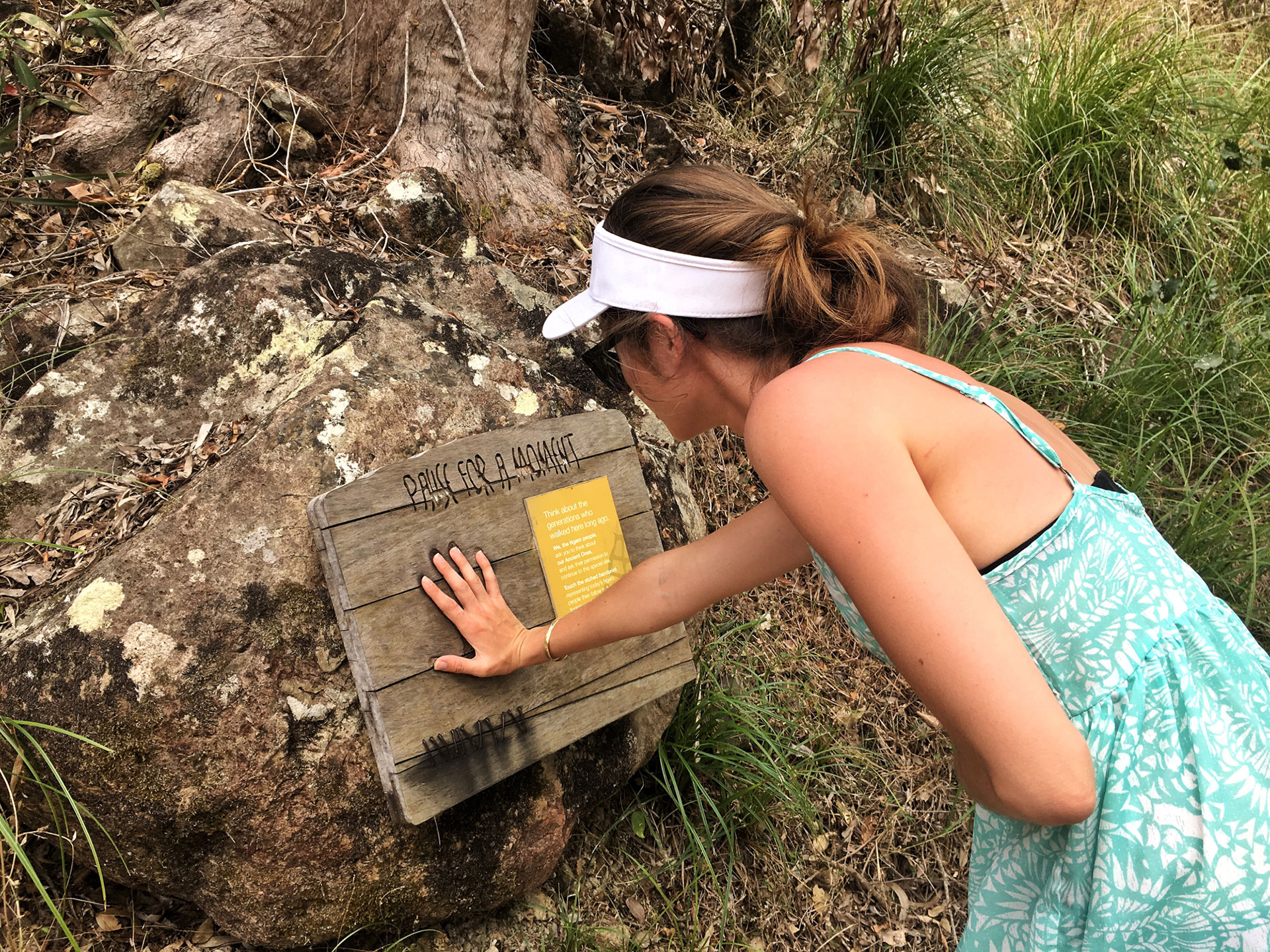
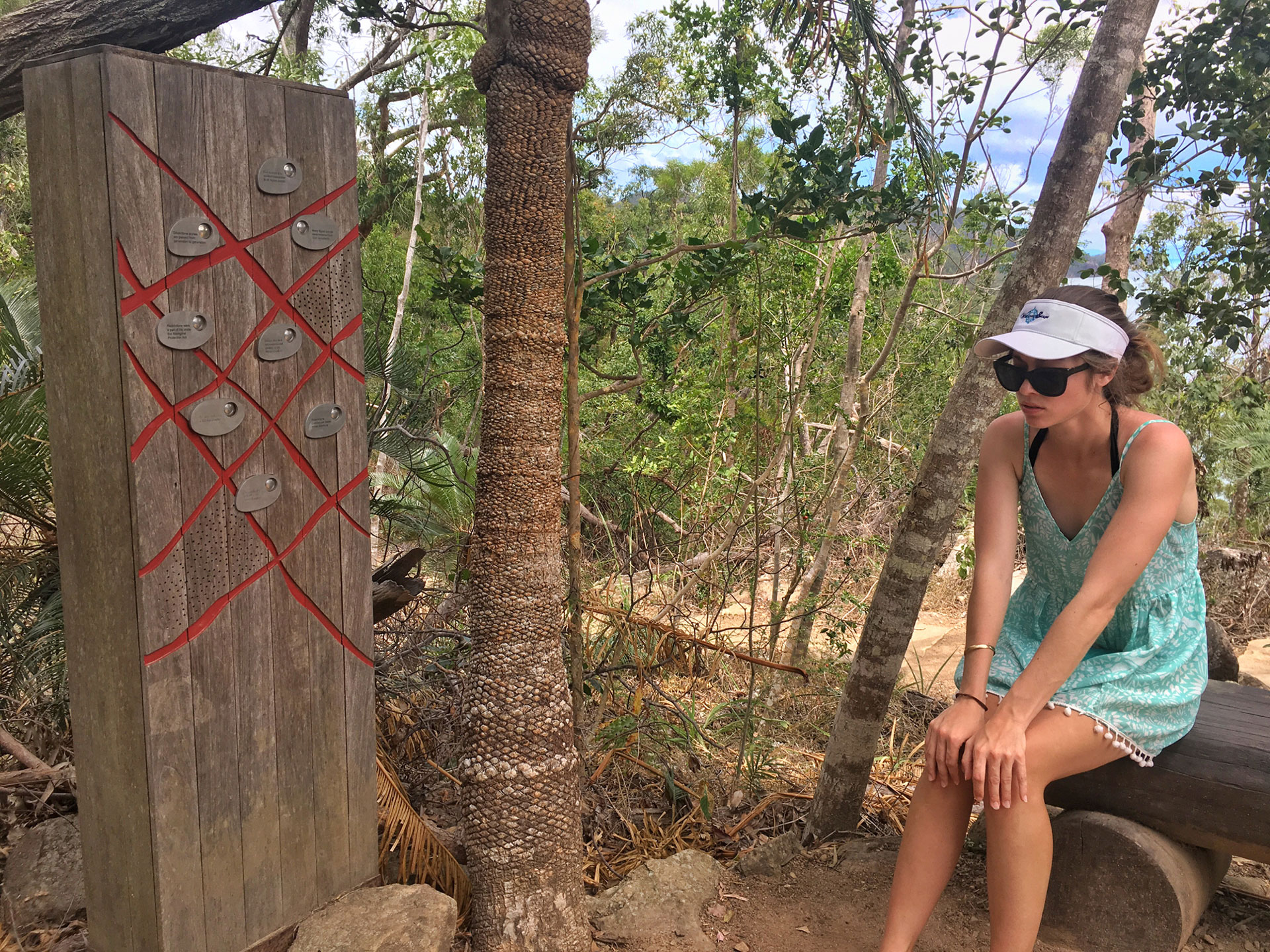
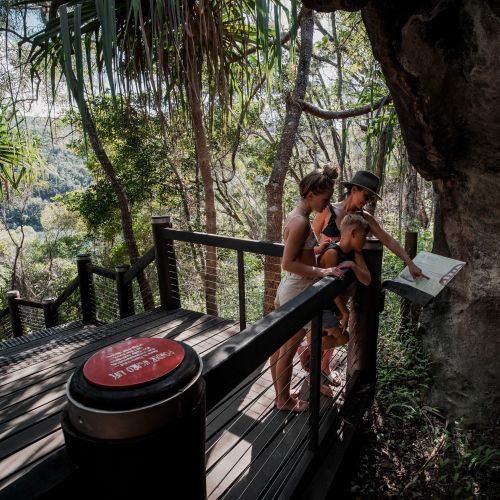
- After about 15 minutes you’ll reach the boardwalk, interpretive displays, audio stories told by Ngaro Elders, and a viewing platform overlooking the caves and rock art.
Allow 1 to 1.5 hours. The walk is only 340 m return, but the stories along the way deserve your time.
Please be respectful. This is a significant cultural site. Keep noise down, stay on the track and boardwalk, and leave everything as you found it.
Our Heritage – First Nations in the Whitsundays
1/4


Frequently asked questions
Who are the Traditional Owners of the Whitsunday Islands? The Ngaro people are the Traditional Owners of the Whitsunday Islands and coastal bays. The Gia people are Traditional Owners of the area around Proserpine.
Where can I see Aboriginal rock art in the Whitsundays? At the Ngaro Cultural Site in Nara Inlet, Hook Island, reached by dinghy and a short walking trail from the anchorage.
Can I visit the Ngaro Cultural Site on a bareboat charter? Yes. Nara Inlet is a sheltered overnight anchorage within the Whitsunday Escape cruising area, and our briefing team can help you plan it into your itinerary.
How long is the Nara Inlet walk? 340 m return. Allow 1 to 1.5 hours to enjoy the displays and audio stories.