
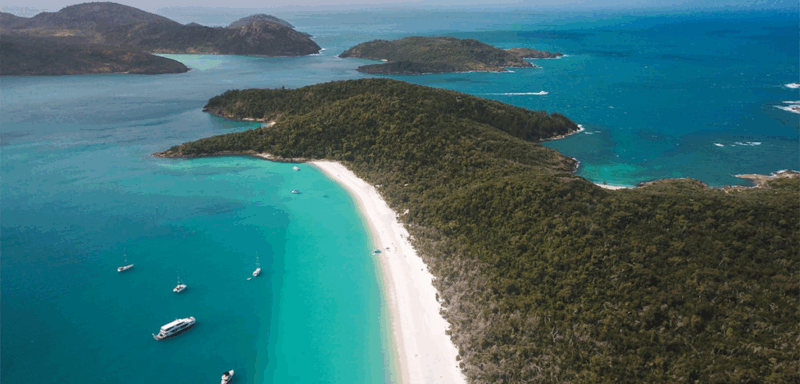
7 NIGHTS IN SE WINDS
7 Night Charter Itinerary Southeast Winds
- 7 stops
- 7 anchorages

Nara Inlet is a long, narrow inlet cutting deep into the south side of Hook Island, with steep, forested hills on both sides. It is one of the most sheltered anchorages in the Whitsundays and is approved for overnight stays in any wind direction. At the far end, a short track leads to a cave decorated with Ngaro rock art, one of the oldest Aboriginal sites on Australia’s east coast. Calm water, easy access and a rich cultural story make it a highlight of any self-skippered charter.
The Ngaro people have lived on and travelled these islands for more than 9,000 years. At the head of Nara Inlet, a once-hidden cave holds their rock art, along with middens that tell the story of these sea-faring people. Signs along the track explain the meaning of the site and its paintings.
Our Heritage, First Nations in the Whitsundays
After heavy rain, a waterfall near the cave may be running, filling a freshwater rock pool at the head of the inlet. It only flows in the wet season, so treat it as a bonus rather than a sure thing.
The calm, sheltered water is perfect for exploring by paddleboard. Use paddleboards only in daylight and in winds under 10 knots, and stay close to the boat.
Dolphins are often drawn to the fish that gather under your stern light at night. Nara Inlet is also known as a place where hammerhead sharks give birth to their young.
Check the zoning map on board before you put a line in, and never throw bait or fish scraps into the anchorage. For zones, species, limits and closure dates, see Fishing in the Whitsundays.
Nara Inlet is a good choice all year, and approved in all wind directions up to 25 to 35 knots. That makes it a reliable stop when strong winds are forecast. The waterfall is most likely to be running after heavy rain in the wet season, from about December to March. Arrive around midday for the best light to see the reef as you come in.
Anchoring. There are no public moorings, so you will need to anchor. Fringing reef extends a long way from the shoreline, so anchor well clear of it, in sand. Anchor in water between 2 m at low tide and 15 m at high tide. In 10 m or less at high tide, lay out at least 40 m of chain. In deeper water, lay out four times the depth. In winds over 25 knots, lay out all your chain.
Refuge Bay. Do not enter Refuge Bay, as there is not enough swing room.
Overnight. Approved in all wind directions up to 25 to 35 knots. Confirm your plans at the morning radio schedule and be anchored by 4pm.
Anchoring tip: Nara Inlet is popular, so arrive in good time to choose your spot and leave plenty of room between you and other boats.
Is Nara Inlet a good overnight anchorage? Yes. It is one of the most sheltered anchorages in the Whitsundays, approved in all wind directions up to 25 to 35 knots.
How long is the walk to the Ngaro Cultural Site? The track is 340 m return. It is steep at the start, so allow about 20 minutes to walk and an hour at the site.
Are there moorings in Nara Inlet? No. There are no public moorings, so you will anchor. Stay well clear of the fringing reef and out of Refuge Bay.
When does the Nara Inlet waterfall run? Only after heavy rain, usually in the wet season.
Can you see dolphins in Nara Inlet? Often, yes. Dolphins are drawn to the fish that gather under your stern light at night.
Nara Inlet


1/5


7 NIGHTS IN SE WINDS
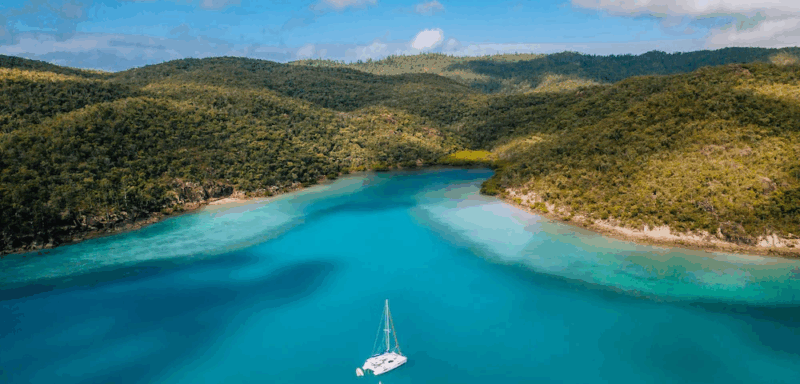
7 NIGHTS IN N WINDS
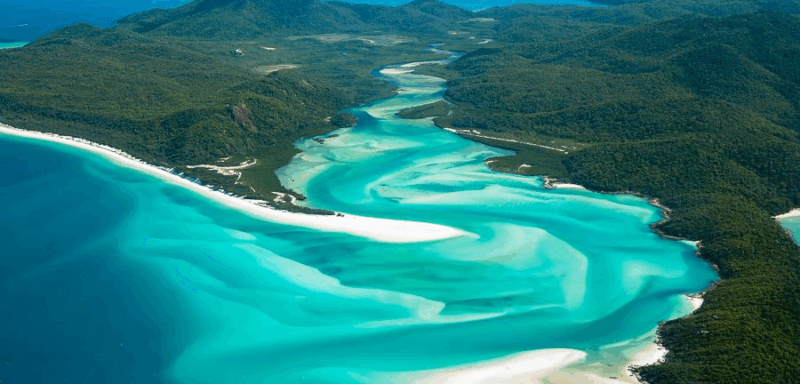
10 NIGHTS IN SE WINDS