
10 NIGHTS IN SE WINDS
10 Night Charter Itinerary Southeast Winds
- 12 stops
- 10 anchorages
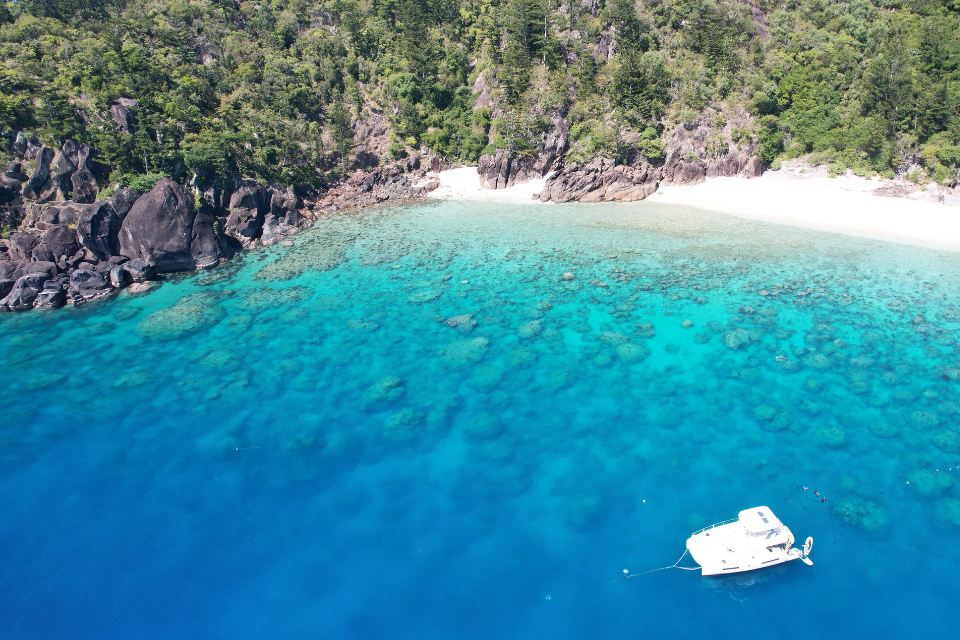
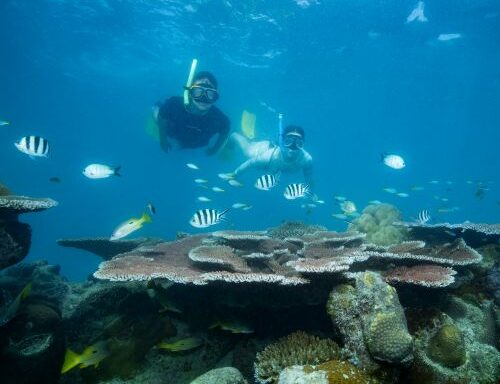
The north coast of Hook Island is home to some of the best snorkelling and diving in the Whitsundays. Four small bays sit side by side along this stretch: Maureen’s Cove, Luncheon Bay, Manta Ray Bay and Pinnacle Bay. Each has its own character, from clownfish and swim-throughs to underwater sculptures and an old lighthouse. They are close enough together to snorkel two or three in a day, and on a self-skippered charter you can pick the bay that suits the conditions. Each bay is a Marine National Park (green) zone, so no fishing is allowed.
Most of these bays are mooring-only, with limited spots and strict wind limits. Plan to visit early in the day, in light winds, and have another bay or anchorage in mind if the moorings are full.
Maureen’s Cove is a sheltered cove with a steep coral rubble beach and fringing reef along both its eastern and western edges. Coral bommies rise from 12 to 15 m to just below the surface, with gullies, shallow caves and schools of reef fish.
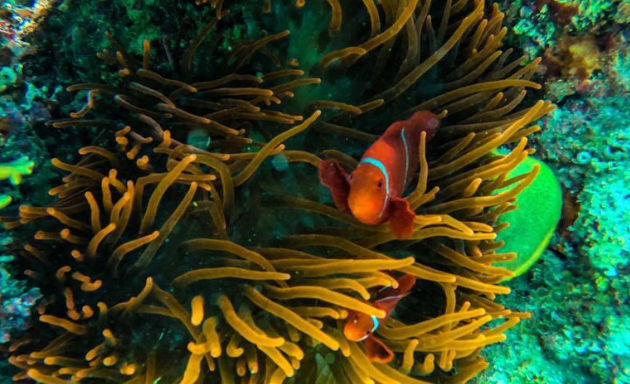
Luncheon Bay is one of the most popular snorkelling and dive sites in the Whitsundays. Coral covers every rocky outcrop, with bommies, caves and crevices down to about 20 m. Look for the resident clownfish living in the anemones, along with Maori wrasse, sweetlips, red emperor and turtles. Manta rays sometimes rest on the sand.
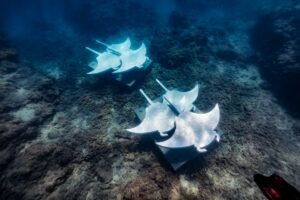
Manta Ray Bay is named for the manta rays that visit from about May to September. Hard and soft corals, swim-throughs and narrow underwater alleys make it a favourite for snorkellers. The bay is also part of the Ngaro Underwater Marine Sculpture Trail, with manta ray sculptures at about 7 m.
Pinnacle Bay sits at the northern tip of Hook Island and is often overlooked, but it is well worth a visit. The water is usually very clear, with pristine coral and good snorkelling and diving. Sea eagles nest on the headlands. Pinnacle Bay is a Marine National Park (green) zone, so no fishing is allowed.
You can snorkel here all year, with water of about 23°C in winter and 27°C in summer. These bays face north, so they are best in light south or south-east winds. Luncheon Bay, Manta Ray Bay and Pinnacle Bay should only be used in winds under 10 knots. Manta rays are most often seen from May to September. Stinger season runs from about November to May, so wear a stinger suit when you swim. Arrive early in the day for calm water and the best chance of a free mooring.
Public moorings. All four bays have free public moorings. They are first come, first served, with one boat per mooring. You can use a mooring for 2 hours between 7am and 4pm. To stay overnight, pick up the mooring after 2pm and leave by 9am the next morning.
Anchoring. Only Maureen’s Cove allows anchoring. Anchor in sand, never on coral, in water between 2 m at low tide and 15 m at high tide, with at least 40 m of chain. Luncheon Bay, Manta Ray Bay and Pinnacle Bay are mooring-only.
Overnight. Maureen’s Cove is approved in south and south-east winds. Luncheon Bay, Manta Ray Bay and Pinnacle Bay are approved in south and south-east winds under 10 knots only. Confirm your plans at the morning radio schedule and be moored or anchored by 4pm.
Mooring tip: the moorings are often close to the fringing reef. Approach at under 3 knots with a lookout on the bow, and take extra care as the wind and tide change.
Which north Hook Island bay is best for snorkelling? All four are excellent. Luncheon Bay is the easiest for beginners, with a beach entry and clownfish. Manta Ray Bay has the underwater sculptures, Maureen’s Cove has large bommies, and Pinnacle Bay usually has the clearest water.
Can you stay overnight in these bays? Yes, in south and south-east winds. Maureen’s Cove is approved for overnight stays with moorings or anchoring. Luncheon Bay, Manta Ray Bay and Pinnacle Bay are mooring-only, and only in winds under 10 knots.
Can you anchor at Manta Ray Bay or Luncheon Bay? No. Luncheon Bay, Manta Ray Bay and Pinnacle Bay are mooring-only. Maureen’s Cove is the only one of the four where you can anchor.
When can you see manta rays at Manta Ray Bay? Manta rays are most often seen from about May to September.
Can you fish in these bays? No fishing is allowed as all bays are Marine National Park (green) zones. See for where you can fish.
Northern Bays


1/7




10 NIGHTS IN SE WINDS

5 NIGHTS IN SE WINDS