
10 NIGHTS IN NE WINDS
10 Night Charter Itinerary Northeast Winds
- 10 stops
- 10 anchorages
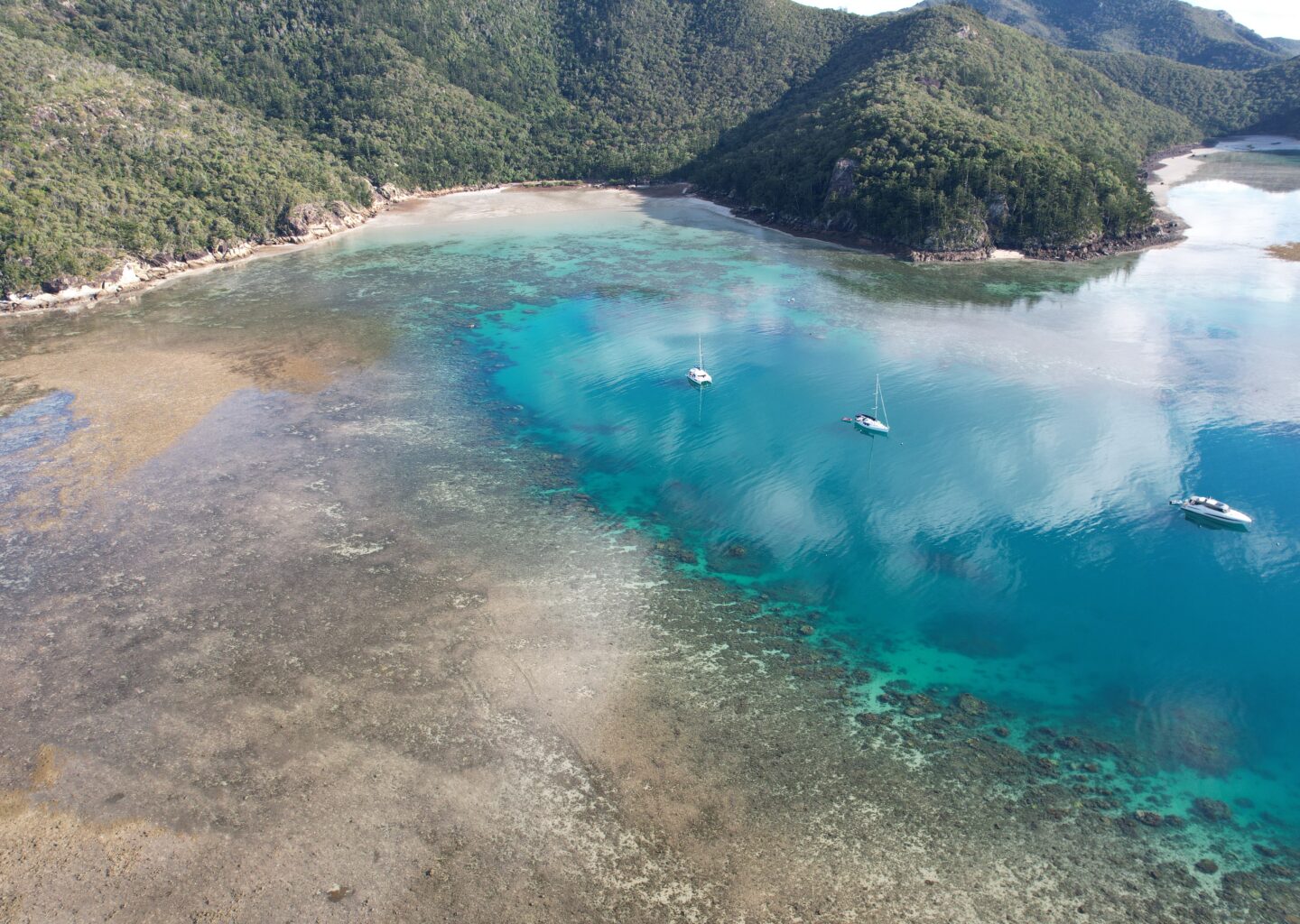
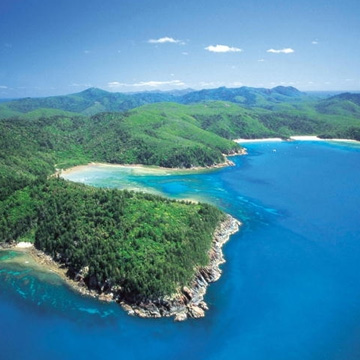
Saba Bay is a quiet, reef-fringed bay on the east coast of Hook Island, and one of the best snorkelling spots in the Whitsundays when the wind swings north. Because it’s open to the south-east trade winds for most of the year, it sees far fewer boats than the northern Hook Island bays. Catch it on the right day and you’ll find shallow coral, turtles, giant clams and sea caves, often with the bay almost to yourself. On a self-skippered charter, you can watch the forecast and choose your moment.
Snorkel the fringing reef
A shallow fringing reef runs around the bay, mostly 1 to 3 m deep and between 50 and 150 m wide. Good coral cover in the shallows drops away to scattered bommies at 7 to 12 m, with interesting bommies on both sides of the bay. Look for butterflyfish, angelfish, groupers and bluespotted stingrays.
Find the giant clams and turtles
Turtles are common in the bay. Giant clams sit in around 2 to 4 m of water, so they’re easy to spot from the surface.
Explore the sea caves
The eastern-most beach has caves you can explore at high tide. They make for some of the best photos on Hook Island.
Beachcomb the bay
Saba Bay has several small beaches, most accessible from mid-tide. Take the dinghy in and pick your own stretch of sand.
Paddle and fish
In calm conditions, the bay is ideal for stand up paddle boarding. Fishing is possible too. Check the zoning map on board before you put a line in.
Stay for sunrise
Saba Bay faces east, so sunrise comes straight over the water. In whale season (June to September), keep an eye out for humpbacks passing offshore.
Saba Bay is a northerly-wind anchorage. It’s at its best in summer, when winds often shift north and open up bays that are hard to reach in the south-east trades. Avoid it in a south-easterly or southerly, when swell rolls into the bay. Your briefing covers the forecast and the best options for each wind direction, and our team is on the radio if conditions change.
Stinger season runs from about November to May, so wear a stinger suit when you swim.
Saba Bay. Protected from north, west and south-west winds. Use a public mooring where one is free, or anchor in sand outside the reef protection markers. Approach slowly with someone on the bow, as coral reef fringes the bay.
Anchoring tip: never anchor inshore of the reef protection markers, and never on coral. Check the Great Barrier Reef Marine Park zoning maps first.
Where is Saba Bay? On the east coast of Hook Island, just south of Mackerel Bay. Hook Island is the second-largest island in the Whitsundays.
Is Saba Bay a good overnight anchorage? Yes, in northerly winds. It’s exposed to the south-east, so check the forecast before you stay the night.
Are there moorings at Saba Bay? Yes. Public moorings are available, and there is room to anchor in sand outside the reef markers.
Is Saba Bay good for snorkelling? Yes. The fringing reef is shallow, with good coral, turtles and giant clams close to the surface. It’s best on calm days with good visibility.
Can I explore the caves at Saba Bay? Yes. The caves in the eastern-most bay are best explored at high tide.
Saba Bay


1/7


10 NIGHTS IN NE WINDS
7 NIGHTS IN N WINDS
5 NIGHTS IN NE WINDS