
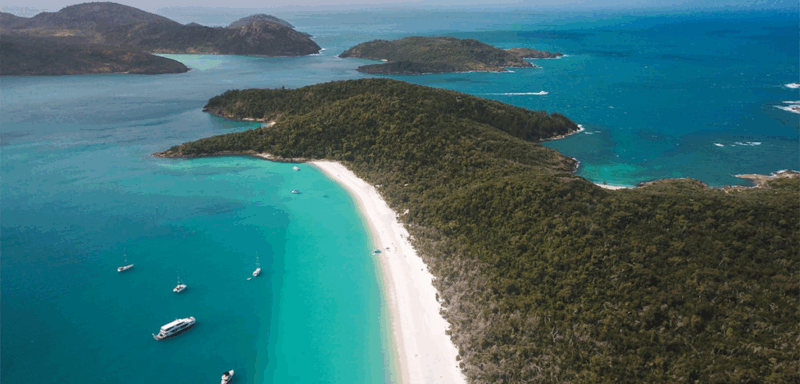
7 NIGHTS IN SE WINDS
7 Night Charter Itinerary Southeast Winds
- 7 stops
- 7 anchorages
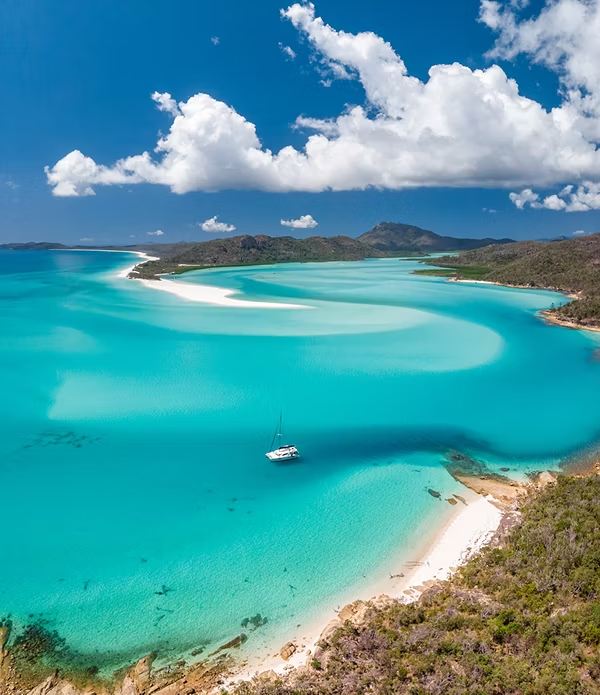
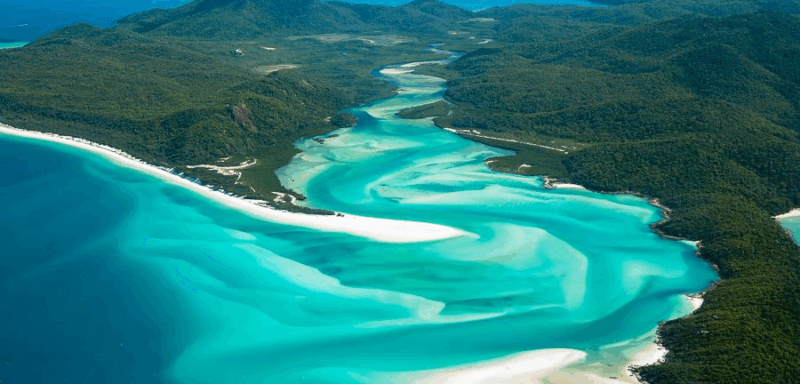
Tongue Bay sits at the northern end of Whitehaven Beach and is the starting point for the walk to the Hill Inlet lookout, one of the most photographed views in Australia. From the lookouts, tidal water swirls through pure white silica sand below, with Whitehaven Beach stretching away to the south. The bay has 14 free public moorings, and turtles are often seen in the water around the boats. On a self-skippered charter, you can time your walk to the tide and have the lookout almost to yourself early or late in the day.
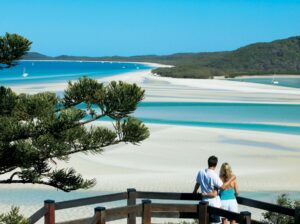
A short, gentle track climbs from the beach at Tongue Bay to a series of lookouts over Hill Inlet. If the first lookout is busy, keep going, as each one has great views.
The fringing reef off the beach is generally impassable at low tide, so land your dinghy on a rising or high tide. You need at least 1.2 m of tide over the reef to get ashore and back. Plan your walk so you can return to the dinghy before the tide drops too far. Approach slowly, then stop the outboard, raise it and paddle the last part. Never drag the dinghy or walk across live coral.
Green turtles and rays are often seen in Tongue Bay. Keep your distance and never touch, chase or feed them. In calm conditions, there is snorkelling on the fringing reef.
The bay is a good spot for paddleboarding in calm weather. Use paddleboards only in daylight and in winds under 10 knots, and stay close to the boat. Bring your camera, as Hill Inlet is one of the great photo spots in the Whitsundays.
Tongue Bay is a good stop all year in south and south-east winds. The swell can be uncomfortable in winds over 15 knots, so check the forecast before you stay the night. For the best views from the lookout, plan to be there around mid to low tide, and land the dinghy on the rising tide beforehand. Stinger season runs from about November to May, so wear a stinger suit when you swim. Early morning and late afternoon are the quietest times at the lookout.
Public moorings. 14 free public moorings sit in the bay. They are first come, first served, with one boat per mooring. You can use a mooring for 2 hours between 7am and 4pm. To stay overnight, pick up the mooring after 2pm and leave by 9am the next morning.
Anchoring. Anchor in sand, never on coral, clear of the fringing reef, in water between 2 m at low tide and 15 m at high tide, with at least 40 m of chain.
Overnight. Approved in south and south-east winds. The swell can be uncomfortable in winds over 15 knots. Confirm your plans at the morning radio schedule and be moored or anchored by 4pm.
Mooring tip: the moorings are popular with day boats. Arrive in the afternoon as the day boats leave, and pick up a mooring after 2pm for the night.
How long is the walk to Hill Inlet lookout? About 1.4 km return from Tongue Bay, graded easy to moderate. Allow about 40 minutes.
When is the best tide for Hill Inlet? The swirling sand is usually clearest around mid to low tide. Land the dinghy on a rising or high tide, as the reef is generally impassable at low tide.
Are there moorings in Tongue Bay? Yes. There are 14 free public moorings. Use them for 2 hours between 7am and 4pm, or overnight if you pick one up after 2pm and leave by 9am.
Can you stay overnight in Tongue Bay? Yes, in south and south-east winds. The swell can be uncomfortable in winds over 15 knots.
Can you see turtles in Tongue Bay? Yes. Green turtles and rays are often seen in the bay.
Tongue Bay


1/8




7 NIGHTS IN SE WINDS
10 NIGHTS IN SE WINDS