
7 NIGHTS IN N WINDS
7 Night Charter Itinerary Northeast Winds
- 7 stops
- 7 anchorages
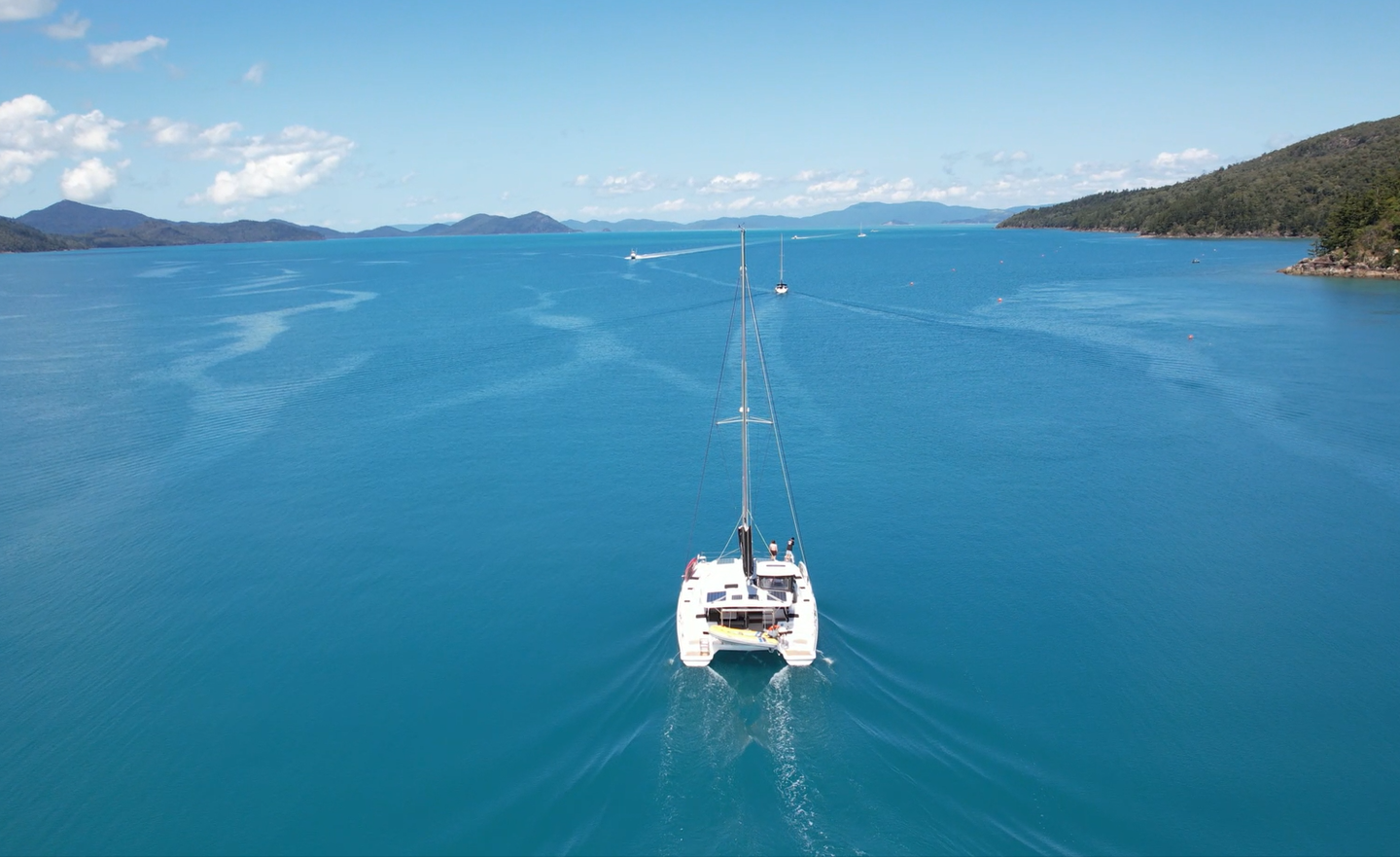
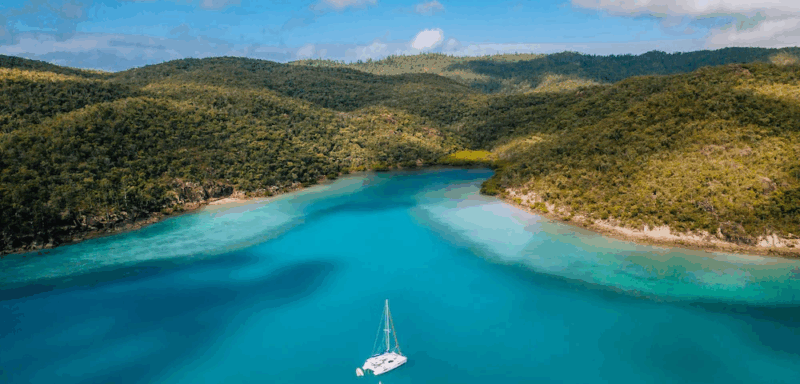
Hook Passage is the channel between Hook Island and Whitsunday Island, and the shortcut between Whitsunday Passage and the eastern side of the islands. It links the west coast anchorages, such as Nara Inlet and Cid Harbour, with Border Island, Tongue Bay and Whitehaven Beach. Steep, forested hills rise on both sides, and the passage has three anchorages of its own.
Tides run strongly through the passage, and the current can flow against what you expect. Plan your trip with the tide tables, and aim to go through close to slack water or with the current behind you.
Cairn Beach sits on the Whitsunday Island side of the passage, a sandy, coral rubble beach backed by shady forest. The fringing reef at the south-east end of the beach has excellent snorkelling. It is a poor anchorage, so use the public moorings.
Observatory Bay is on the Hook Island side, home to the former Hook Island Underwater Observatory, built in 1966. The 12 moorings here are privately owned and maintained, and there are no facilities ashore.
Summer Bay is also on the Hook Island side of the passage. It is approved for overnight stays in north to north-west winds only, so it is a useful option when the wind swings to the north. Watch out for the fringing reef as you come in.
You can travel through Hook Passage all year, but the tide matters more than the season. Plan to pass through close to slack water, and avoid wind against tide. For an overnight stop, choose Cairn Beach in south or south-east winds, Summer Bay in north to north-west winds, and Observatory Bay in either. Stinger season runs from about November to May, so wear a stinger suit when you swim. Arrive at your anchorage around midday for the best light to see the reef.
Public moorings. Cairn Beach has 5 free public moorings. They are first come, first served, with one boat per mooring. You can use a mooring for 2 hours between 7am and 4pm. To stay overnight, pick up the mooring after 2pm and leave by 9am the next morning.
Private moorings. Observatory Bay has 12 privately owned moorings. Call ahead to book.
Anchoring. Cairn Beach is a poor anchorage, so use the moorings. In Summer Bay, anchor in sand, never on coral, in water between 2 m at low tide and 15 m at high tide, with at least 40 m of chain. Allow for the current when you set the anchor.
Overnight. Confirm your plans at the morning radio schedule and be moored or anchored by 4pm.
Mooring tip: the current can swing the boat quickly. Approach moorings into the current at under 3 knots, with a lookout on the bow.
Where is Hook Passage? Hook Passage is the narrow channel between Hook Island and Whitsunday Island, linking Whitsunday Passage to the eastern side of the islands.
Is Hook Passage safe to navigate? Yes, with good planning. Tides run strongly, so go through near slack water, pass the western marker to the south, and follow the routes in 100 Magic Miles.
Can you stay overnight in Hook Passage? Yes. Cairn Beach is approved in south and south-east winds, Summer Bay in north to north-west winds, and Observatory Bay in both, on private moorings booked in advance.
How hard is the Whitsunday Cairn track? It is short but steep and demanding, so it suits fit walkers. Wear sturdy shoes and carry water.
Can you snorkel in Hook Passage? Yes, at the fringing reef at the south-east end of Cairn Beach. Never snorkel in the passage itself, where the current is strong.
Hook Passage


1/2

7 NIGHTS IN N WINDS