
Snorkelling
Cruise the islands of the Great Barrier Reef Marine Park. Snorkelling gear is provided free on all boats - some of the best reef snorkelling in Australia is right here.
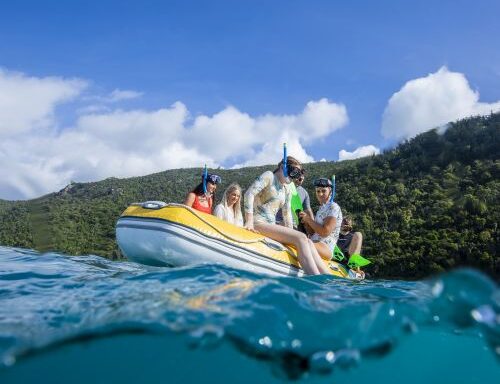
Snorkel the Great Barrier Reef straight from your own boat. The Whitsunday Islands are fringed with coral reef, and many of the best spots are a short swim from the beach. On a self-skippered charter you choose the bay, the tide and the time, then slip in before the day boats arrive. Every guest on a Whitsunday Escape charter, including children, gets a mask, fins and snorkel free of charge.
Best snorkelling spots in the Whitsundays
The clearest water is usually north and east of Hook and Whitsunday Islands.
Hook Island: the northern bays
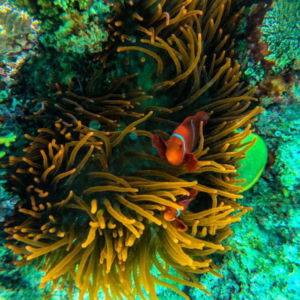
The bays across the top of Hook Island have healthy coral and some of the richest fish life in the Whitsundays.
- Butterfly Bay: snorkel the eastern walls of both halves of the bay. Well protected from southerly winds.
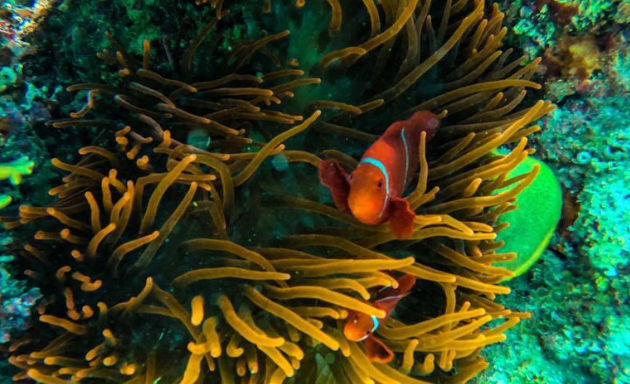
- Luncheon Bay: look for clownfish on the small reef between the two beaches. It has more public moorings than nearby bays, so you are more likely to get one.
- Maureen’s Cove: the eastern wall of the cove is the best area to explore.
- Manta Ray Bay: some of the best underwater scenery in the Whitsundays. A day stop only, in light conditions. Some moorings are for dinghies only, and anchoring is not allowed,
- The Pinnacles: good coral, plus the old lighthouse area to explore ashore.
Staff tip: keep an eye out for the resident Maori wrasse around the Hook Island bays. It is large, curious and often comes to check out snorkellers.
Blue Pearl Bay, Hayman Island
A coral beach on the west side of Hayman Island, with small nooks and caves to explore underwater. It is very popular, so arrive early for a mooring.
Cateran Bay and Dumbell Island
Cateran Bay, on the north side of Border Island, is known for diverse fish and curious batfish (flat, about the size of a dinner plate and harmless). Nearby Dumbell Island has Christmas tree worms close to shore and plenty of reef fish. Visit both in light conditions only.
Chalkie’s Beach and Haslewood Island
White silica sand runs straight into a ridge of coral at Chalkie’s Beach, opposite Whitehaven Beach. For a longer snorkel, follow the reef from Katie’s Cove, past Honeymoon Island, to Chalkie’s Beach. Go when the tide is low and the water is calm.
Langford Island
Sea grass around the Langford Island sand cay attracts sea turtles, so you may find yourself snorkelling alongside one. Follow your briefing notes for the approach, as reef extends a long way from the island.
Bali Hai, Black Island
A rich reef that bigger boats rarely visit, with clownfish colonies and the occasional turtle. Take the dinghy to the small beach on a rising tide and snorkel from the shore, and don’t get caught out at low tide. Reef extends a long way around Black Island, so follow the routes in 100 Magic Miles.
Snorkel gear included with your charter
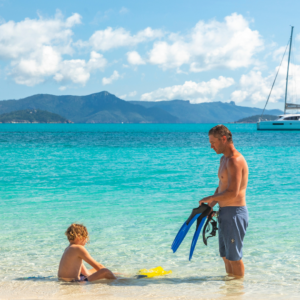
Every guest gets a mask, fins and snorkel free of charge, packed and ready before you arrive.
- Fin sizes: send us the shoe size of everyone in your crew before you arrive, so the right fins are packed.
- Collect at check-in: one person picks up the gear from the dive shop below the Whitsunday Escape office at Coral Sea Marina. Try it on aboard before you leave.
- Hire extras: prescription masks and wetsuits (stinger suits) are available to hire.
- Return: drop the gear back to the dive shop at the end of your charter.
How to snorkel the reef from your boat
- Swim from the beach: many bays have fringing reef within an easy swim of the sand.
- Take the dinghy: anchor it on sand or rock beside your chosen spot, never on live coral.
- Time the tide: conditions are usually best between a quarter and three-quarter tide. For the best look at the coral, snorkel when the water is 1 to 2.5 m above the reef.
- First time? Start in waist-deep water and use a wetsuit or pool noodle for extra buoyancy until you feel confident.
- Clear mask: rub a little saliva inside the lens and rinse before fitting, and keep sand out of the seal.
Snorkelling safety
- Always snorkel with a buddy, and keep a lookout for other boats.
- Only snorkel in clear water. Avoid dusk and dawn, and areas where fish are being caught or cleaned.
- Turn off the depth sounder, motors and generator before anyone enters the water.
- Watch for currents, especially around headlands, and plan your route before you get in.
- Don’t touch or stand on coral, and leave shells where they are.
- Signal for help by waving your arms above your head.
Stinger season in the Whitsundays
Marine stinger season runs from about November to May. Irukandji jellyfish can be found in island waters during these months, so wear a stinger suit whenever you swim or snorkel. Vinegar is the first aid treatment for stings, and your boat’s onboard information explains what to do. Stinger suits can be hired, or bring your own.
Best time to snorkel in the Whitsundays
You can snorkel the Whitsundays all year. Water is about 23°C in winter and 27°C in summer, and a wetsuit keeps you comfortable in the cooler months. Light winds open up the northern bays and day stops such as Manta Ray Bay. On your own boat you can snorkel early, before the day boats arrive, and choose the tide that suits each spot
Snorkelling


1/5


- Snorkel the northern bays of Hook Island
- Explore the coral nooks of Blue Pearl Bay, Hayman Island
- Look for batfish at Cateran Bay, Border Island
- Follow the reef from Katie's Cove to Chalkie's Beach
- Snorkel with turtles at Langford Island
- Hire a stinger suit or prescription mask through Equipment Hire
Frequently Asked Questions
Is snorkelling gear included in the charter?
Yes. A mask, fins and snorkel are free for every guest, including children. Prescription masks and wetsuits can be hired.
Can you snorkel the Great Barrier Reef from the Whitsundays?
Yes. The Whitsunday Islands sit inside the Great Barrier Reef Marine Park, and their fringing reefs are part of it
Great Barrier Reef Marine Park
Where is the best snorkelling in the Whitsundays?
The northern bays of Hook Island, Blue Pearl Bay on Hayman Island and Chalkie’s Beach on Haslewood Island are among the best. The clearest water is usually north and east of Hook and Whitsunday Islands.
Do I need to be a strong swimmer to snorkel?
No. Start in shallow water from the beach, and use a wetsuit or pool noodle for extra buoyancy.
Can I scuba dive on my charter?
Yes, if you are qualified. Scuba gear can be hired from the dive shop below our office on presentation of your qualifications. Check with us first, as some boats have limited space for tanks.